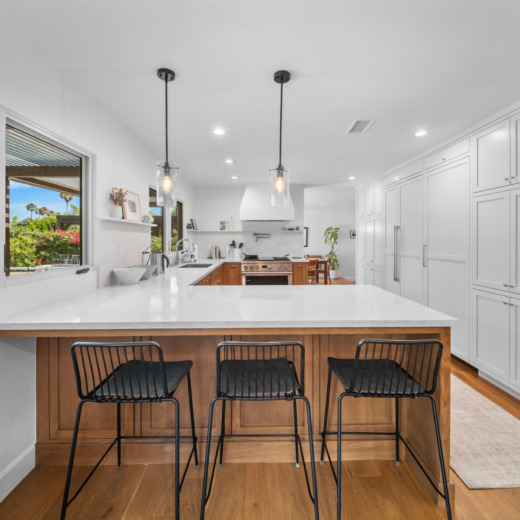
Most homeowners build a remodel budget backwards. First they pick a number that sounds fair. Maybe $75,000, maybe $150,000, maybe whatever a neighbor mentioned at a barbecue in Woodland Hills. Only then do they try to squeeze a scope into it. Halfway through demo, the number and the scope meet in a hallway, and only one of them walks out.
Flip the order. Define the outcome, price that outcome, and decide how you will fund it last. This guide walks through where the money goes in Los Angeles, the San Fernando Valley, and Ventura County. It covers the permit and plan check fees that catch people off guard, the contingency reserve nobody wants to fund, and the contract wording that turns a fixed price into a moving target.
Your Remodel Budget Starts With Scope, Not a Number
Before you price anything, name the problem you are solving. “Remodel the kitchen” is not a scope. “Move the range off the exterior wall, open the wall to the dining room, and add a 36-inch pantry” is a scope. In practice, a scope that clear can be priced within a few percent.
Write down three things. First, what has to change. Second, what you would like to change. Third, what you are only changing because the wall is already open. That third list is where a remodel budget grows. Opening a wall twice costs more than opening it once, so the list sometimes saves money as well.
Rank them from most important to least. Sooner or later a bid lands above your ceiling. At that point you want a pre-agreed order of what comes out. Better to decide that calmly at your kitchen table than at 7 a.m. on a Tuesday with a framing crew waiting.
Scope Moves Price More Than Finish Level
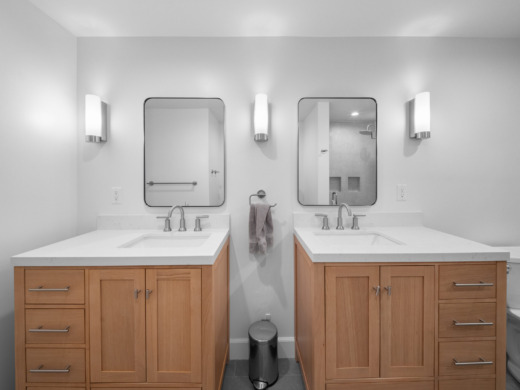
Our published bathroom bands for the Calabasas and Woodland Hills market show this clearly:
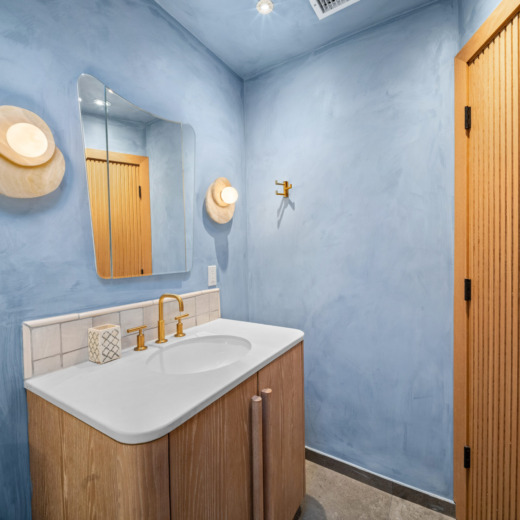
- $25K-$40K: guest or hall bath refresh. Same layout, same plumbing spots. New tile, vanity, fixtures, paint.
- $40K-$60K: full remodel to the studs. Gut to studs, some fixture moves, new plumbing and wiring rough-in, better tile and glass.
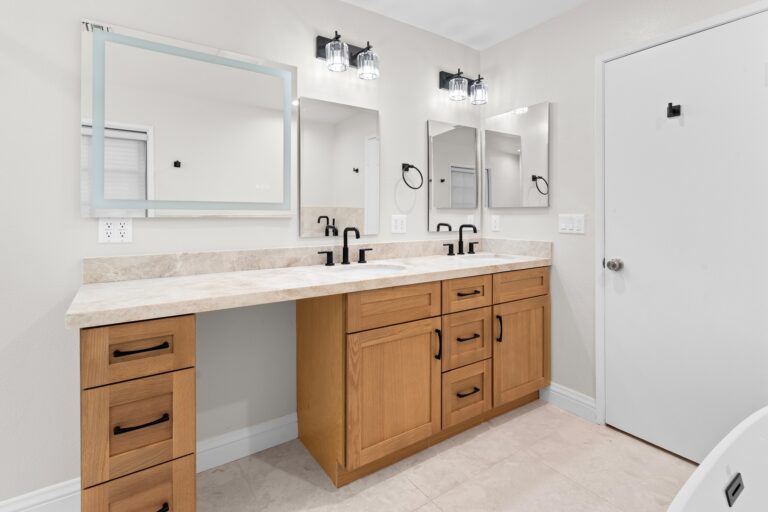
- $60K-$85K: primary bathroom. Layout changes, larger footprint, custom vanity, freestanding tub, curbless shower, higher-grade stone and fittings.
- $85K and up: luxury primary suite. Structural changes, steam, heated floors, slab-matched stone, custom millwork and glass, premium fittings throughout.
These ranges reflect typical permitted work in our market. Timing, material choices and selections can push the final cost higher than the ranges shown here.
Notice what moves you between tiers. Certainly not the faucet. Instead, it comes down to three questions. Does the plumbing move? Do walls move? Does anything need an engineer?
How a Remodel Budget Breaks Down by Trade
Every bid, however it looks on paper, uses some version of the same groups. Once you know them, you can compare two bids that seem to share nothing.
Demolition and disposal
Tear-out, dumpsters, hauling, and dump fees. Usually a small share of the remodel budget, though disposal costs in LA County are real. Selective demo costs more than a full gut, because the crew has to work slowly and protect everything that stays.
Structural and framing
New walls, removed walls, beams, posts, foundation work, and hardware. Anything that changes how load travels through the house lands here. Usually it drags an engineer and a plan check along with it.
Rough trades
Plumbing, wiring, and HVAC inside the walls. In practice, this is the invisible half of a remodel, and the half where older Valley housing stock gets pricey. Cloth-wrapped wiring, galvanized supply lines, and small panels rarely survive a modern inspection.
Insulation, drywall, and paint
Predictable, rarely dramatic, and one of the few groups where price mostly tracks square footage.
Finishes
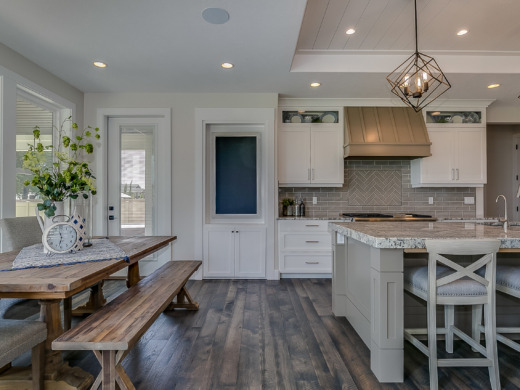
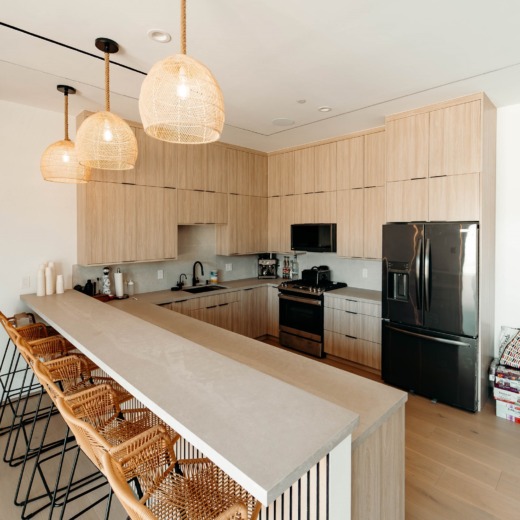
Flooring, tile, cabinetry, counters, millwork. This is the most visible spend and by far the most elastic. For instance, the same kitchen layout can be finished for $40K or $140K, purely on selections.
Fixtures, appliances, and equipment
Plumbing fittings, lighting, appliances, glass, hardware. Easy to underestimate, because you buy them in pieces over several months.
Permits, plan check, and agency fees
Covered in detail below. Treat them as a real line in your remodel budget, never a rounding error.
Design, drawings, and engineering
Drawings, structural calculations, Title 24 energy compliance, and any surveys. On a permitted remodel, none of that is optional. It all lands before construction starts, which means you pay for it early.
General conditions
In short, the cost of running the job: supervision, site protection, temporary power and toilets, fencing, cleanup, deliveries, and the project manager’s hours. When a bid looks oddly low, general conditions are often missing.
Overhead and profit
The contractor’s cost of running a licensed, insured, warrantied business, plus margin. A bid that shows it plainly does not cost more than one that hides it; the number is simply out where you can see it.
A Typical Remodel Budget Allocation Table
Below are typical ranges we see across homes in Los Angeles and Ventura County. They are not a quote and not a promise. Ranges overlap, and they will not total exactly 100%. For example, a kitchen leans hard toward cabinetry, a whole-house remodel leans toward rough trades, and a hillside project leans toward structural work.
| Category | Typical share of total | What moves it |
|---|---|---|
| Demolition and disposal | 2-5% | Selective demo, hazmat, disposal distance |
| Structural and framing | 5-15% | Removed walls, beams, foundation, hillside conditions |
| Rough plumbing, electrical, HVAC | 12-20% | Fixture relocation, panel upgrade, old systems |
| Insulation, drywall, paint | 7-12% | Square footage, ceiling heights, texture matching |
| Flooring and tile | 7-14% | Material grade, pattern complexity, substrate prep |
| Cabinetry and millwork | 10-20% | Stock vs. semi-custom vs. shop-built |
| Countertops, fixtures, appliances | 8-15% | Selections, slab yield, appliance package |
| Permits, plan check, agency fees | 2-6% | Declared valuation, jurisdiction, added square footage |
| Design, drawings, engineering | 3-8% | Structural scope, Title 24, survey needs |
| General conditions | 5-10% | Duration, site access, occupied vs. vacant |
| Overhead and profit | 15-25% | Company structure, risk, project complexity |
| Contingency reserve | 10-20% on top | Building age, unknowns behind walls |
Why Permits and Plan Check Fees Surprise LA Homeowners
Two things catch people. First, plan check is a separate fee from the permit. In the City of Los Angeles, permit fees track your declared project valuation. Then the plan check fee gets charged on top, as a share of the building permit fee. In fact, the City’s own fee rules set plan check at 90% of the building permit fee for most work (Los Angeles building code, plan check fees). In other words, the number on that fee calculator was roughly half the story. Before you file, it also helps to read how the city runs counter plan check.
Second, “the permit” is usually several permits. Building, wiring, plumbing, and mechanical each get issued and inspected on their own, with their own fees. Then add a grading permit on a sloped lot, a sewer cap fee, a school facilities fee on new conditioned square footage, and a green building or energy surcharge in some cities.
Every City Runs Its Own Counter
Third, and this is the one that truly costs money, every city in our service area runs its own counter. Los Angeles, Calabasas, Agoura Hills, Thousand Oaks, Simi Valley, and unincorporated LA County all differ. Fee schedules differ, plan check turnaround differs, and so does the appetite for over-the-counter approval. As a result, a permitted bathroom in Woodland Hills and the same bathroom in Camarillo are two different permitting projects. If your scope includes an accessory unit, the sequence changes again, which we broke down in our guide to the ADU permitting process.
Here is a practical planning number. On a permitted remodel, hold permits, plan check, and related agency fees at a low single-digit share of construction cost. In most cases, assume plan check takes weeks, not days. Unless your city offers an express counter for your scope, plan on the longer path.
A Remodel Budget Without Contingency Is a Wish
Set aside 10-20% of construction cost. Hold it apart, keep it untouchable, and never count it toward finishes. On a house built after 2000 with a simple scope, 10% holds up fine. On a 1950s Valley ranch, a hillside home, or any wall you have never seen inside of, plan on 15-20%.
That is not padding; it is the price of the unknowns. For example: knob-and-tube behind lath, a slab leak, dry rot at a sill plate, a wall that turns out to be bearing, an inspector who wants more blocking. None of that is anybody’s fault, and all of it costs money on a schedule you did not choose.
Who finishes on budget? The homeowners who funded contingency on day one and treated the leftovers as a bonus. By comparison, the ones who blow through it spent the reserve on upgraded tile in week two, then met the dry rot in week five with nothing left.
Allowances vs. Fixed Pricing: Read This Part Twice
An allowance is a placeholder. It means the contract says “$8,000 for tile” because you had not picked tile yet. Then you select $14,000 worth of tile, and the $6,000 gap is yours. Most contracts leave you covering the labor gap as well, if the new material installs slower.
Allowances are fair, and early in a project they are sometimes hard to avoid. Even so, they turn into a problem in two ways. First, when someone sets them low to make a bid look sharp. Second, when a contract carries so many of them that a “fixed price” is really 30% guesswork.
Ask One Question About Every Allowance
Before you sign, walk the allowance schedule line by line. For each line, ask the same question: what product does this number buy, at what store, today? If the answer sounds vague, the allowance sits too low. Ask for a reset to something you would actually install, even though the contract price goes up. Ultimately, a higher honest number beats a lower fictional one.
More importantly, the real cure is selections. Every finish you lock in before demo is one fewer allowance and one fewer chance for the number to drift. That is why we push clients hard on early selections. Granted, it is unglamorous work, yet it protects a remodel budget more than anything else you can do.
Change Orders and How to Avoid Most of Them
Change orders come from three places. First, discovery, meaning something unexpected behind a wall. Second, owner changes, such as a bigger island. Third, design gaps, where the drawings never said what happens at that corner. Only the first one is truly unavoidable, and that is what contingency covers.
In contrast, the other two are largely preventable. Finalize drawings before demo, and complete selections before framing. Walk the site weekly with your project manager, and require every change in writing, priced, before work moves ahead. In practice, a verbal “sure, go ahead” in a driveway is how a $4,000 surprise shows up on invoice six.
Budget your decisions, not just your dollars. Change orders cluster around homeowners who travel, carry heavy work weeks, or wait on a partner to weigh in. Simply put, a remodel budget needs someone who can answer questions within a day.
What Actually Drives Cost Up
- Moving plumbing. Relocating a toilet, sink, or shower drain means opening a slab or a floor, then re-sloping waste lines. Reliably, it is the fastest way to push a bathroom from the $25K-$40K band into the $40K-$60K band.
- Removing structural walls. That means a beam, posts down to new footings, engineering, and plan check. Opening a kitchen to a living room is a fine idea. Still, it is a structural project, not a cosmetic one.
- Electrical service upgrades. Older Valley homes with 100-amp service often cannot carry an induction range, an EV charger, a heat pump, and modern lighting. A service upgrade also pulls in the utility and its own schedule.
- Custom millwork. Shop-built cabinetry and built-ins get made once, for your house, by hand. Beautiful, and priced to match.
- Tight site access. Narrow driveways, no street parking, shared alleys, and HOA delivery windows add labor hours to every single delivery.
- Hillside lots. Common across Calabasas, Encino, and the Santa Monica Mountains foothills. Typically, expect grading review, geotechnical input, caisson or retaining work, and crane or pump costs that flat-lot jobs never see.
- Occupied construction. Living in the house during work means dust walls, phased scheduling, and daily cleanup. Worth it for many families, though never free.
Where to Save, and Where Saving Backfires
Save here without regret. Keep plumbing and bearing walls where they sit. Use stock or semi-custom cabinetry with upgraded hardware. Run a modest slab on the perimeter counters, then splurge on one island slab. Buy lighting and plumbing fixtures during sales rather than at list. Keep the window openings and swap only the units. Finally, handle paint colors and the end-of-job landscaping cleanup yourself.
Do not save here. Waterproofing and shower pans. Plumbing supply and drain lines you already have open. Wiring rough-in. Insulation and windows on the sun-facing side. And the structural work itself. All of it hides behind finishes, so redoing it later means demolishing what you just paid to build.
Never Save by Skipping the Permit
Unpermitted work surfaces later during resale, refinance, appraisal, and insurance claims. Then retroactive permitting costs far more than the original permit would have. Before you sign, check any bidder against the state license record with the CSLB license lookup. For a sense of how permitted scope drives pricing, our breakdowns of 10×10 kitchen remodel cost, garage conversion cost, and home addition costs in Ventura County show how scope and price track together.
Funding a Remodel Budget, at a High Level
We build things. We are not financial advisors, and none of this is advice about your situation. Still, it helps to know the four paths homeowners in our market tend to use when they fund a remodel budget.
- Cash or savings. Simplest: no interest, no underwriting. The tradeoff is liquidity, so do not drain the emergency fund to fund the reserve.
- HELOC. A revolving line against your equity, drawn as you need it. Popular for phased work, because you pay interest only on what you drew.
- Cash-out refinance. This replaces your mortgage with a larger one. Whether it makes sense depends on how your current rate compares to today’s, which is a talk for your lender.
- Renovation loans. These underwrite on the home’s projected value after the work, rather than its value today. Useful for large scopes on lower-basis homes, though they bring more paperwork and contractor documents.
Whichever route you pick, confirm the funding before you sign a construction contract. Otherwise a project can pause mid-framing while financing gets sorted, and that costs money in remobilization and schedule.
Build the Remodel Budget Before You Fall in Love With the Tile
A good remodel budget is a document, not a number. It holds a scope, a line-item breakdown, a selections list, a funded contingency, and a contract with as few allowances as you can manage. Homeowners who build that document before demo end up talking about their finished kitchen remodel or home addition instead of their overruns.
FAQ
Frequently Asked Questions
How much does a remodel cost in Los Angeles?
Mostly it depends on scope, not square footage. As a reference from our own market, a bathroom remodel runs $25K-$40K for a guest or hall bath refresh, $40K-$60K for a full remodel to the studs, $60K-$85K for a primary bath, and more at the luxury end. Kitchen remodels typically run $35K-$150K, and whole-interior remodels typically run $75K-$250K depending on the size of the home and the scope of work. Timing, materials, selections, and structural or hillside conditions can push every one of those numbers higher.
What percentage of a remodel budget should go to contingency?
Set aside 10-20% of construction cost, held apart from the finish side of your remodel budget. Usually 10-12% works for newer homes with simple scopes. By comparison, use 15-20% for pre-1970 construction, hillside lots, or any project where you open walls blind. Contingency covers discovery, never upgrades.
Why are permit and plan check fees so high in LA?
Because cities calculate them from your declared project valuation, and plan check bills separately on top of the building permit. In the City of Los Angeles, that runs 90% of the building permit fee for most work. Then add separate electrical, plumbing, and mechanical permits, plus school fees on added square footage.
What is the difference between an allowance and a fixed price?
A fixed price is a committed number for a defined product or scope. By contrast, an allowance is a placeholder for something you have not picked yet, so you cover the gap when your selection costs more. Too many allowances turn a "fixed price" contract into an estimate, so make selections early and question any allowance that looks low.
Is it cheaper to remodel in phases or do everything at once?
All at once almost always costs less per square foot, because you mobilize crews, permits, and site setup one time instead of three. Still, phasing makes sense when it matches how you can fund the work, or when a future addition is coming. In that case, rough in for the future scope now, so you avoid demolishing new work later.
How do I keep a remodel budget from drifting once work starts?
Lock the drawings, lock the selections, and fund the contingency before demo day. Then require written, priced change orders for anything new. Review the running total with your project manager every week, so a small drift never hides until the final invoice.
Planning a Home Remodel in Los Angeles or Ventura County?
Use the form below to send us your must-have and nice-to-have lists. We will schedule a free consultation and give you a line-item number that includes permit fees and a funded contingency.
Ready to start your project?
Schedule a consultation meeting today and get your project on the go!
We are glad to address any inquiries you may have. Please write us a few words about your project and we’ll set up a meeting with one of our project managers.
- (805) 367-1965
- info@rndbuildersinc.com
- 21250 Califa St, Suite #214, Woodland Hills, CA 91367
- CA License #1081122
Tell us about your project
As Seen
On



Awards











Our work
Completed Home Remodeling Projects
Real homes RnD Builders finished across Los Angeles and Ventura County.
 Home RemodelCamarillo Home RemodelView project
- Home RemodelEcho Park Complete Home RemodelView project
- Home AdditionManhattan Beach Home Addition & RemodelView project
- Home RemodelMoorpark Home RemodelView project
- Home RemodelNewbury Park Complete Home RemodelView project
- Home RemodelRedondo Beach Home RemodelView project
- Home RemodelSimi Valley Complete Home RemodelView project
- Home AdditionThousand Oaks Complete Home Remodel & AdditionView project
- Home RemodelThousand Oaks Full Home RemodelView project
- Home RemodelThousand Oaks Complete Home RemodelView project