Choosing remodel materials in Southern California is a different job than choosing them in Ohio or Georgia. Our UV load runs brutal. Meanwhile indoor humidity swings from about 20% in a Santa Ana wind event to 70% under a June marine layer. Most of our houses sit on slab-on-grade foundations that move. In addition, many of the hillside neighborhoods we work in, Calabasas, West Hills, Chatsworth, Agoura Hills, Newbury Park, sit inside mapped wildfire severity zones with their own material rules. As a result, a finish that performs beautifully somewhere else can cup, fade, delaminate or fail inspection here.
In practice, we build a remodel materials list room by room. First we ask how the family uses the room. Then we weigh what we have watched fail locally. Durability, installation reality, maintenance. No mood boards.
How to choose remodel materials room by room
Before anyone opens a sample book, we ask three questions about the space. How much water hits this surface? How much abrasion does it take? And how much sun does it get? Those three answers cut most of the remodel materials catalog before taste enters the picture.
- Water exposure. Bathrooms, laundry rooms, mudrooms and the six feet around a kitchen sink all count as wet zones. Anything that swells when wet, MDF cabinet boxes, unsealed wood, paper-faced substrates, fails there no matter how it looks.
- Abrasion. Entries, kitchens and hallways with kids and dogs take grit, and grit works like sandpaper. Hardness and finish repairability therefore matter more than color.
- Sun. A west-facing great room in the Valley in August works like a UV chamber. Woods amber, vinyl wear layers chalk, and paints read warmer by late afternoon.
One local fact drives more decisions than any other. Almost every post-1950 tract home here sits on a slab. Moisture vapor migrates up through concrete, so you cannot nail solid hardwood down without building a subfloor first. That single constraint shapes the entire flooring conversation.
Flooring: the choice that touches everything else
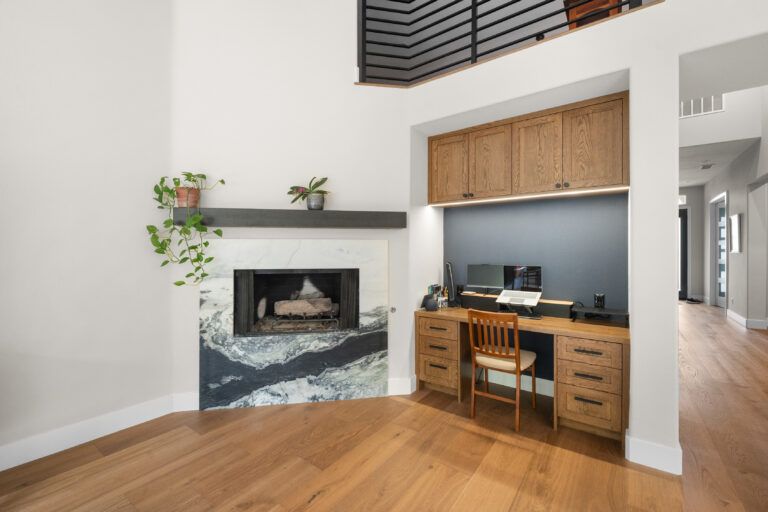
Of all the remodel materials in the house, flooring covers the most square feet. It also costs the most to redo. Here, then, is how the five realistic options behave.
Engineered hardwood
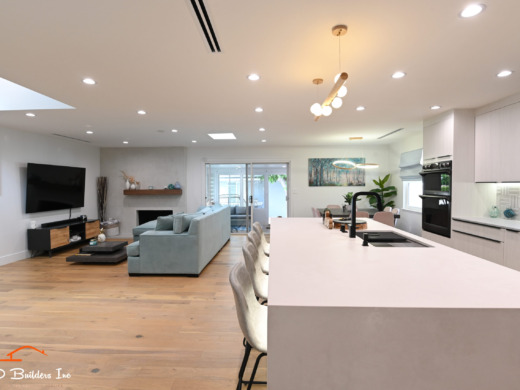
A real wood wear layer sits over a cross-laminated plywood or HDF core. That core stays far more stable than solid wood when humidity swings 40 points in a week. It also glues straight to a properly prepped slab. Ask for a wear layer of 3mm or thicker if you ever want to refinish it. By comparison, 1mm to 2mm gives you a one-life floor.
Solid hardwood
You can refinish it four or five times. Even so, it remains the hardest floor to install correctly over a slab. It needs a plywood or sleeper subfloor, which raises the finished floor. Then doors, transitions and toe-kicks all need adjusting. In raised-foundation homes in Sherman Oaks or older Encino neighborhoods it makes real sense. Over a slab, though, engineered usually wins.
Luxury vinyl plank
LVP shrugs off water, forgives an imperfect slab, and suits ADUs, rentals and busy family homes. Above all, watch wear layer thickness. Builder-grade runs 12 mil, while we spec 20 mil for family traffic. Its weakness is heat. For example, a floating LVP floor behind unshaded south or west glass can expand and buckle, so those rooms want a glue-down installation.
Porcelain tile
Porcelain gives us the most durable surface we install. It stops water cold, and it suits slab construction naturally. Still, two cautions apply. First, tile hates movement, so in seismic country plan on an uncoupling membrane and well-placed movement joints. Otherwise you get cracked grout and eventually cracked tile. Second, large-format tile demands a flat substrate. Lippage tolerance on a 24×48 plank runs tiny, so budget for floor leveling.
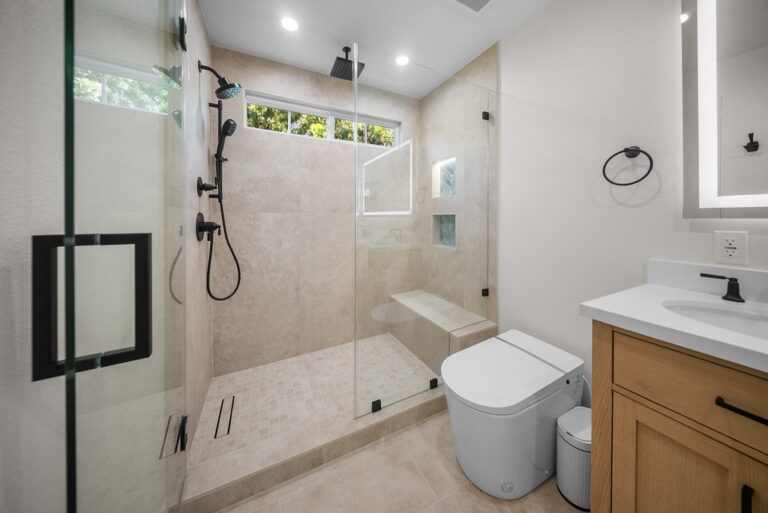
Bathrooms carry their own moisture and waterproofing rules. For more detail, see our dedicated notes on bathroom material selections.
Polished concrete
If the slab is sound, this costs the least per square foot and lasts for good. It also stays honest about being concrete. Old cracks telegraph, plumbing patches show, and it feels hard and cold underfoot. Overall, it works well in garage conversions and modern additions, and poorly in bedrooms.
Flooring comparison at a glance
| Material | Cost tier | Durability | Moisture tolerance | Subfloor requirement | Best-use rooms |
|---|---|---|---|---|---|
| Engineered hardwood | $$-$$$ | High with a 3mm+ wear layer. Refinishable once or twice. | Moderate. Handles humidity swings, not standing water. | Glue-down or float over a flat, moisture-tested slab. | Living, dining, bedrooms, hallways. |
| Solid hardwood | $$$ | Longest lifespan. Refinishable 4-5 times. | Low. Moves with humidity, and spills mark it. | Plywood subfloor or sleepers. Never direct to slab. | Raised-foundation homes, formal rooms, bedrooms. |
| Luxury vinyl plank | $-$$ | Good. Dents under point loads, and wear layer sets its life. | High. Waterproof core. | Tolerates minor slab imperfection. Glue down in hot rooms. | Kitchens, laundry, ADUs, rentals, kids’ rooms. |
| Porcelain tile | $$-$$$ | Highest surface durability. | Highest. Full wet-area rated. | Flat slab plus uncoupling membrane and movement joints. | Bathrooms, entries, kitchens, indoor-outdoor runs. |
| Polished concrete | $-$$ | Permanent surface. Cracks appear, and they stay cosmetic. | High, though vapor needs managing. | The existing slab, ground and sealed. | Garage conversions, modern additions, workshops. |
Whatever remodel materials go over a slab, insist on a moisture test before you order. Calcium chloride or in-situ relative humidity testing costs a few hundred dollars. In return, it prevents the most expensive flooring failure we get called about: a glued floor releasing from a slab that still gives off vapor. Garage slabs offend worst, because many went in with no vapor barrier at all. That is one of several reasons those projects carry surprises, which we cover in our breakdown of what a garage conversion actually costs.
Countertops: what survives a hot pan and a sunny window
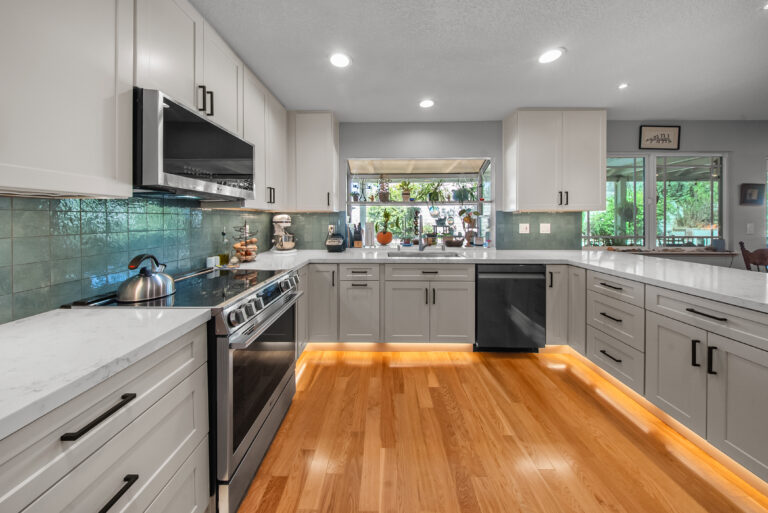
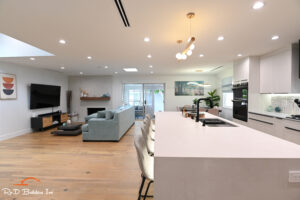
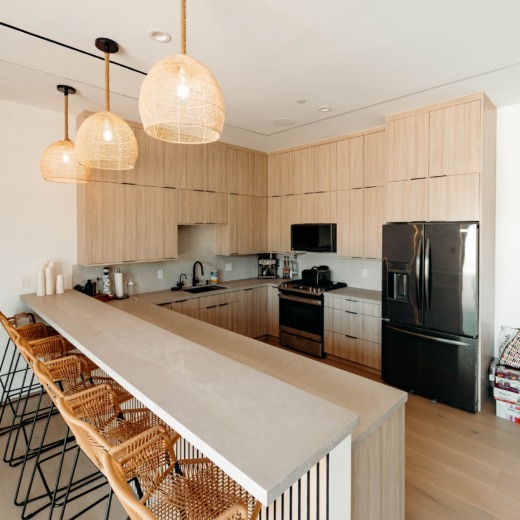
Countertops win on looks in the showroom and on behavior in year five. When you compare remodel materials for counters, four serious options come up. Each one behaves very differently.
Quartz
Quartz is engineered stone, roughly 90% ground quartz in a resin binder. It stays non-porous, never needs sealing, and looks consistent slab to slab. That is why it remains the default in most kitchens we build. Its weakness is heat, because the resin scorches. In other words, a pan straight off the burner can leave a permanent mark. Direct sun matters too, which is why quartz does not belong on an outdoor counter. Under our UV, the resin can yellow.
Natural stone
Natural stone splits in two. Granite and quartzite are hard and take heat well, yet they stay porous, so they need resealing on a schedule. Marble, meanwhile, is soft and reactive. For example, lemon juice etches it in seconds. Marble in a primary bathroom is defensible. Marble behind a family cooktop is a decision to make with open eyes.
Porcelain slab
Porcelain slab is the toughest of the group. It holds color under UV, laughs at heat, stays non-porous, and comes in large formats with few seams. Still, it turns brittle at the edges during fabrication, so it demands an experienced fabricator. That is where the cost sits. For outdoor kitchens and sun-flooded waterfall islands, though, it is usually our pick.
Butcher block
Butcher block is warm, cheap and sandable. It is also wrong next to a sink unless you commit to maintenance. In our humidity swings it needs oiling several times a year, and it will move. Instead, keep it on an island or coffee bar, well away from a wet zone.
Slab size also drives seam placement. As a result, islands much over 10 feet need either a seam or a jumbo slab at a premium. Our 10×10 kitchen remodel cost breakdown shows how far surface selection moves a total. Meanwhile our kitchen remodeling page explains how we sequence the countertop template so the schedule holds.
Paint and color: our light will change your color
Paint looks like the cheapest item on your remodel materials list. Yet more homeowners get burned here than anywhere else in the finish schedule. Southern California light is intense, high in contrast, and warm late in the day. As a result, a gray that looked cool on a two-inch chip reads lavender at 8 a.m. Then it reads distinctly beige at 5 p.m. on a west wall in Woodland Hills. The paint did not change. The light did.
- Judge undertones, not names. Every neutral leans green, blue, violet or yellow. Hold candidates against plain white printer paper, and the undertone jumps out. Then check it against your floor, counter and tile, because nobody repaints those later.
- Test on the actual wall, at scale, over a full day. Paint two-foot squares on at least two walls, one sunlit and one not. Next, look at them morning, afternoon and under evening light. Most bad color calls happen under showroom fluorescents.
- Match sheen to the surface’s job. Flat hides drywall flaws, though it will not scrub. Eggshell suits bedrooms and living areas, satin suits bathrooms, kitchens and hallways, and semi-gloss suits trim and doors. In rooms with strong raking sunlight, drop one sheen level, since gloss exaggerates every taped seam.
For a restful bedroom, the calm comes from low contrast rather than a trendy color. Keep walls, trim and ceiling within a few steps of each other. Then choose a muted mid-tone with a stable undertone, and let texture carry the interest. On exteriors and sun-blasted south walls, pay for a UV-resistant formulation, because saturated colors fade unevenly here.
Cabinetry and millwork: what you can inspect yourself
Cabinetry usually ranks second-largest in a kitchen budget. Of all your remodel materials, it also hides bid savings best. That said, you do not need to be a woodworker to check it.
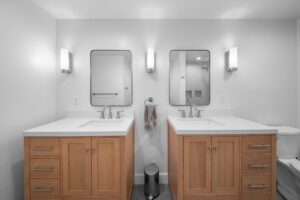
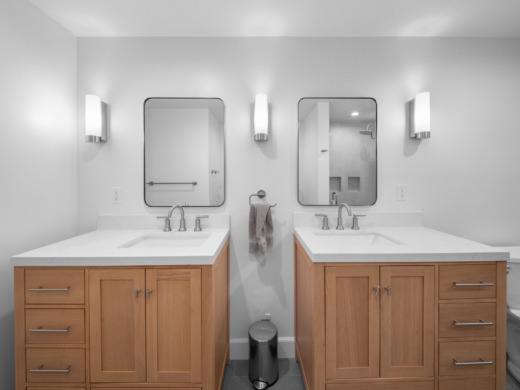
- Box construction. Choose plywood boxes, ideally 3/4-inch, over particleboard. That goes double under sinks and in bathrooms. Particleboard that gets wet swells, and it never recovers.
- Drawer joinery. Look for solid wood drawer boxes with dovetailed corners, not stapled butt joints. Once you pull a drawer all the way out, the corner joint tells you everything.
- Hardware. Specify full-extension soft-close undermount slides and concealed six-way adjustable hinges. That adjustability lets an installer align reveals in a house whose walls are not plumb, which covers most houses here.
- Finish. Check the inside edge of a door and the back of the face frame, since quality finishes stay consistent on hidden surfaces. Painted cabinets should carry conversion varnish or another catalyzed finish, never brushed latex.
- Fit. Ask how the installer handles out-of-square walls. Scribe strips, fillers and a leveled base are the right answers.
On additions and ADUs we usually push money into box construction and hardware, and out of exotic door styles. Ultimately, the joinery is what you feel every day for 20 years. Our home additions page covers where finish budgets tend to drift.
Exterior remodel materials in California: heat, UV, fire and drought
Outdoors is where bad choices fail fastest. Generally, four constraints drive everything. Surface temperature, UV damage, wildfire exposure, and the cost and rules around irrigation water.
Decking
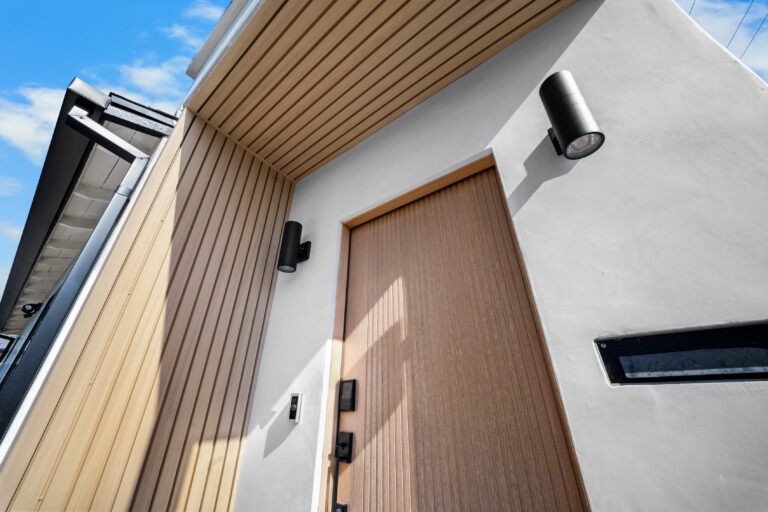
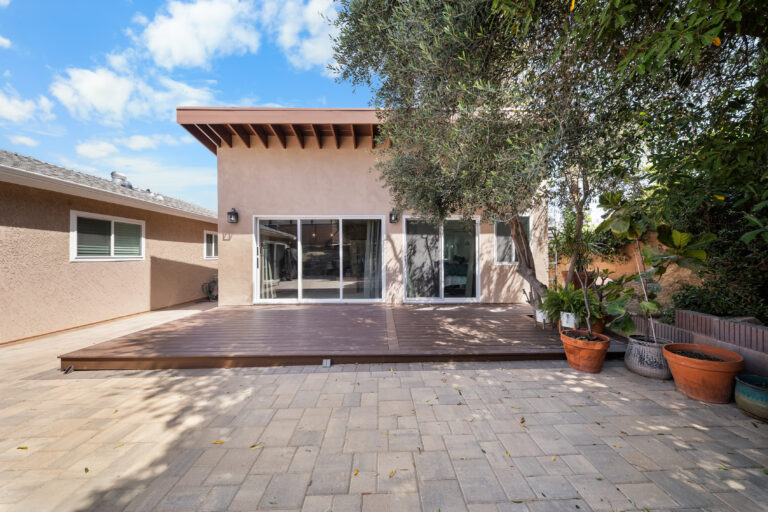
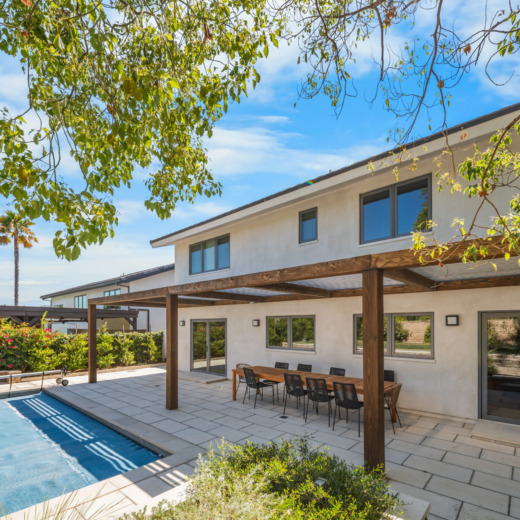
Composite and PVC decking skip the annual sealing that real wood demands here. Still, dark composite boards get too hot for bare feet in a Valley August. Lighter colors help, so check the manufacturer’s surface temperature data before you order. In a Very High Fire Hazard Severity Zone, decking is not a free choice. California Building Code Chapter 7A governs exterior materials in Wildland-Urban Interface fire areas. Deck boards near the structure generally must meet an ignition-resistance standard tested under State Fire Marshal Standard 12-7A-4. Confirm the listing before you buy, not after.
Pavers and hardscape
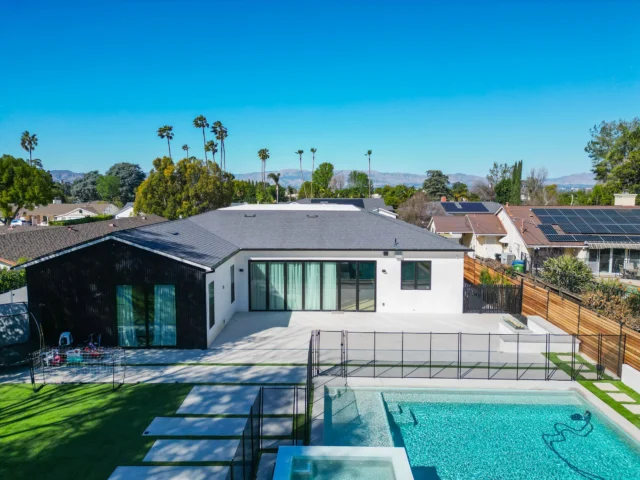
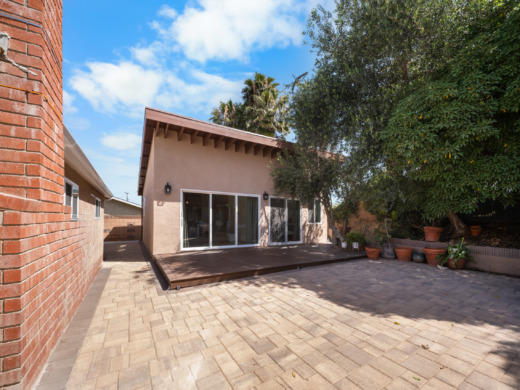
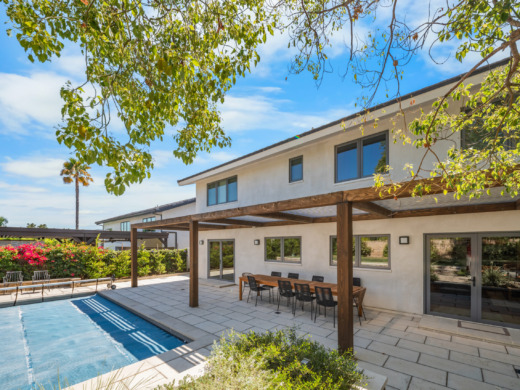
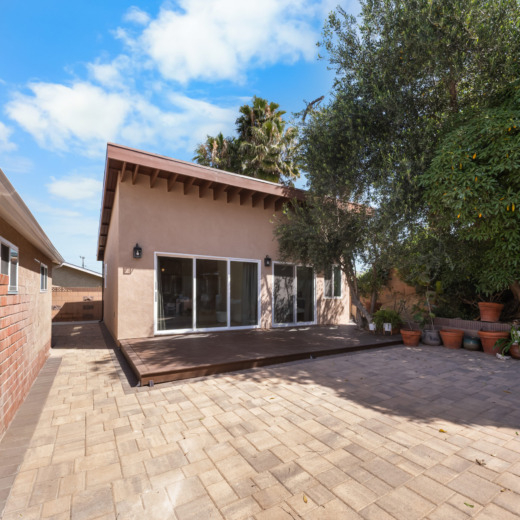
Of the remodel materials outside the house, hardscape takes the most heat. Concrete pavers on a compacted base beat poured slabs in our seismic and expansive-soil conditions, for one simple reason. A paver field flexes, and you can lift and reset single units, while a poured patio cracks on its own schedule. For pool decks and south-facing patios, lighter concrete or porcelain pavers also run much cooler underfoot.
Stucco and siding
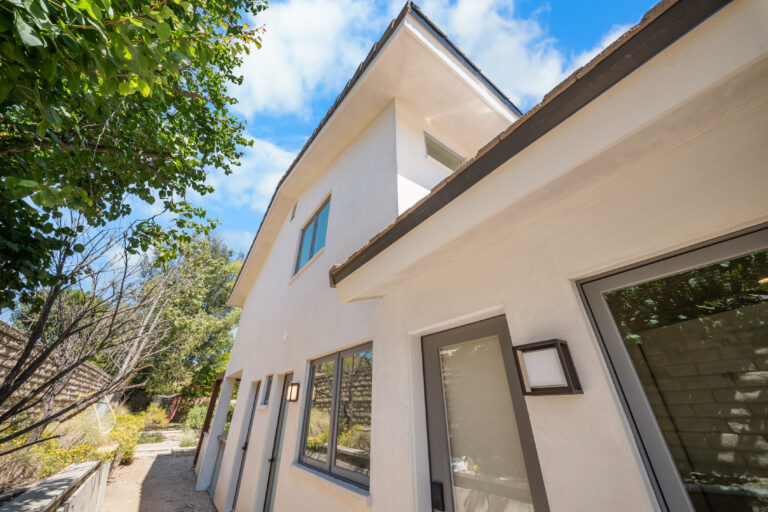
Most homes here wear stucco, and most stucco problems are water problems rather than material problems. The weather-resistive barrier behind it does the real work, together with the flashing at windows, decks and roof-to-wall junctions. When we re-stucco, we therefore care more about the lath, the layered building paper and the weep screed than about finish texture. Stucco performs well on the fire side too. The vulnerable points are eaves, vents and anything combustible touching the wall.
Wildfire zones and the first five feet
In a mapped fire severity zone, code narrows your remodel materials before taste does. Because of that, plan the ground immediately around the house as hardscape. California has moved toward a mandatory ember-resistant “Zone 0.” That means the first five feet around a structure stays clear of combustible material, including bark mulch, woody plants and stored firewood. CAL FIRE’s defensible space program calls it the most important zone of all. Regulations approved in 2026 phase these requirements in over several years for properties in State Responsibility Areas and Very High Fire Hazard Severity Zones. Put simply, that means gravel, pavers or bare mineral soil against the foundation instead of mulch beds. Decide it during design, not after the landscaper has planted.
Outdoor kitchens and drought-aware yards
Porcelain slab and dense natural stone hold up outdoors. Quartz and butcher block do not belong out there. Cabinet carcasses should use marine-grade polymer, powder-coated aluminum or masonry. Never use plywood with a stone veneer, which we have opened up and found rotted. On the planting side, California’s water-efficient landscape rules push toward low-water palettes and drip irrigation. Ultimately, a drought-tolerant yard with generous hardscape costs less to run, and it stays easier to keep fire-safe.
Choose remodel materials before construction, not during
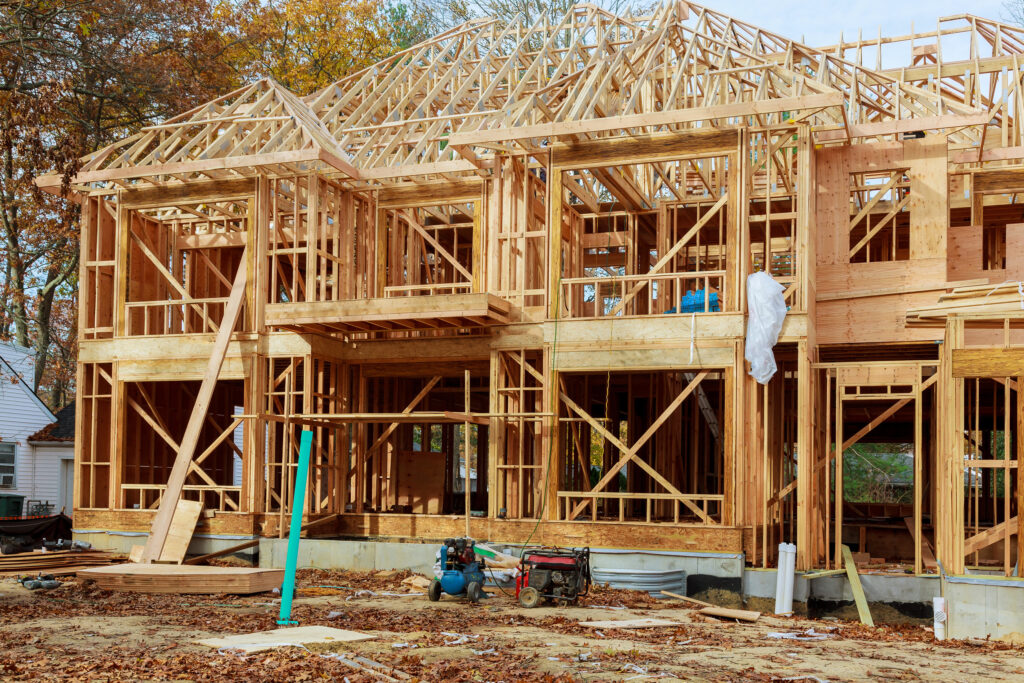
Some remodel materials take months to arrive. Long-lead items include cabinets, tile, slab counters and specialty windows. Order them before framing wraps up, or the schedule stalls waiting on a box. Usually we build the finish schedule during design, confirm lead times in writing, then set a start date. Our step-by-step guide to building a home addition lays out where selections land in the sequence.
Permit review shapes the list too. Energy rules for additions and alterations sit in the Title 24 guidance from the California Energy Commission. While they are still on paper, check the window, insulation and lighting choices.
Getting the selections right the first time
The remodel materials that hold up here match how you actually live. They also survive the climate outside your windows, and they install correctly on the house you already have. In short, the slab, the framing, the exposure and the fire zone narrow the field long before taste does.
FAQ
Frequently Asked Questions
What is the best flooring for Southern California homes?
For most homes here, pick engineered hardwood or porcelain tile. Both handle our humidity swings, and both install correctly over the slab-on-grade foundations common across the San Fernando Valley and Ventura County. Choose LVP when the budget runs tight or the room gets truly wet. Choose solid hardwood when you have a raised foundation and want a floor you can refinish for decades.
Can I install hardwood floors over a concrete slab?
Yes, though not solid nail-down hardwood directly. Engineered hardwood can glue or float over a slab once you have moisture-tested and leveled it. Solid hardwood needs a plywood subfloor or sleeper system on top of the slab, which adds cost and raises the finished floor enough to affect doors and transitions.
Is quartz or granite better for a Southern California kitchen?
Choose quartz for almost every indoor kitchen, because it never needs sealing and behaves predictably. Granite or quartzite makes sense if you set hot pans down constantly, or if you want natural variation and do not mind resealing now and then. For anything outdoors or in direct sun, skip both and use porcelain slab, which holds its color under UV.
How do I pick a paint color that will not look wrong on the wall?
Paint two-foot samples on at least two walls of the actual room. Then look at them in morning, afternoon and evening light before you commit. Compare candidates against white paper to expose the undertone, and check them against your floor and countertop. Our light shifts warm in the afternoon, so colors usually read warmer and lighter than they did on the chip.
What remodel materials are required if my home sits in a wildfire zone?
In Wildland-Urban Interface fire areas, California Building Code Chapter 7A sets ignition-resistance requirements for roofing, siding, eaves, vents, exterior windows and decking. The state is also phasing in an ember-resistant five-foot Zone 0 around structures. Specifics vary by jurisdiction, so verify early with your local building department, such as LA County Building and Safety plan check.
Planning a Home Remodel in Los Angeles or Ventura County?
Bring your samples and your finish schedule to a free consultation. We will tell you which materials hold up on your slab, your exposure and your fire zone, and give you a real number for the work.
Ready to start your project?
Schedule a consultation meeting today and get your project on the go!
We are glad to address any inquiries you may have. Please write us a few words about your project and we’ll set up a meeting with one of our project managers.
- (805) 367-1965
- info@rndbuildersinc.com
- 21250 Califa St, Suite #214, Woodland Hills, CA 91367
- CA License #1081122
Tell us about your project
As Seen
On



Awards











Our work
Recently Completed Projects
Real homes RnD Builders finished across Los Angeles and Ventura County.
 Kitchen RemodelThousand Oaks Kitchen RemodelView project
- Home AdditionCalabasas Home Addition & RemodelView project
- Home AdditionManhattan Beach Home Addition & RemodelView project
- Custom HomeWoodland Hills Custom HomeView project
- Home RemodelThousand Oaks Home RemodelView project
- ADUSimi Valley ADU ProjectView project
- Home AdditionSanta Rosa Valley Home AdditionView project
- Bathroom RemodelAgoura Hills Bathroom RemodelView project
- Home RemodelThousand Oaks Home TransformationView project
- ADUHawthorne ADU 3View project