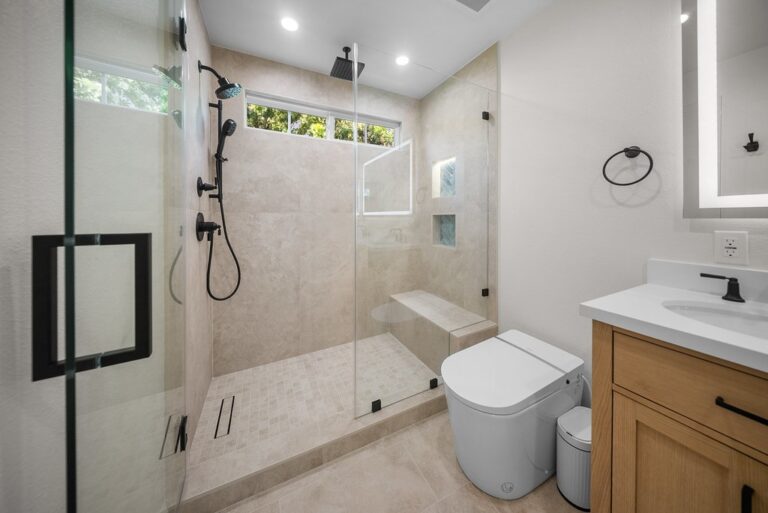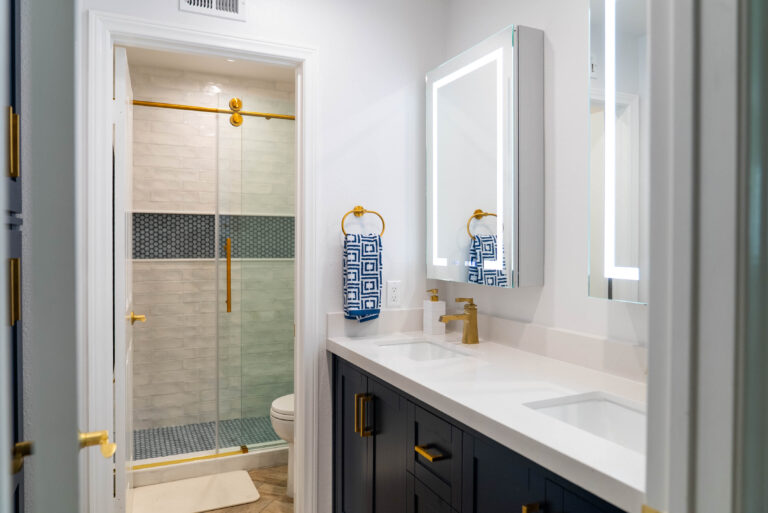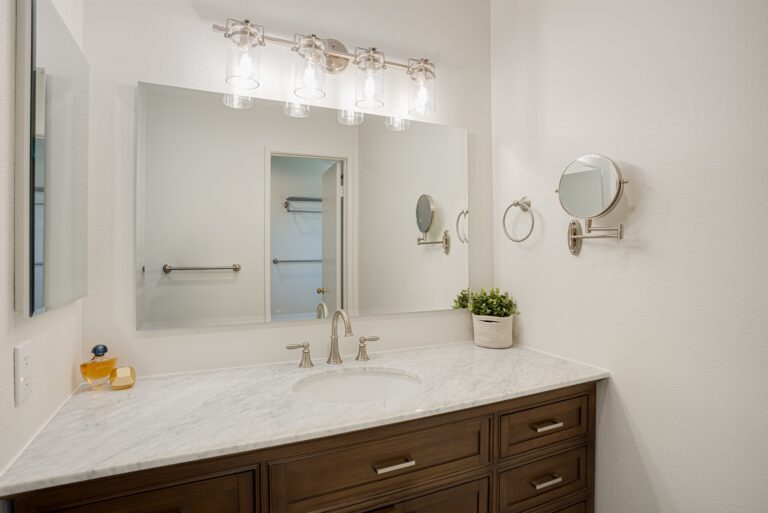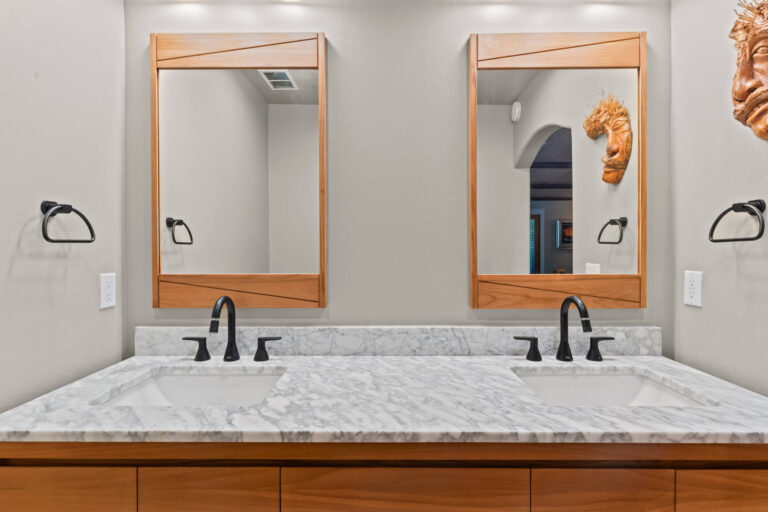
Search for a bathroom remodel in Calabasas and you get a thousand design galleries. Most homeowners want one thing first, though: a number. In the Calabasas and Woodland Hills market, a bathroom remodel lands in one of four price bands, running from about $25,000 for a guest bath refresh to $85,000 and beyond for a luxury primary suite. Where you land has almost nothing to do with taste. Instead, it tracks how much of the room you disturb.
RnD Builders Inc has built in the west Valley since 2015 and holds CSLB license #1081122. What follows is how we price bathrooms here: each tier, the items that quietly drive the number up, and how to read a bid before you sign it.
What a bathroom remodel costs in Calabasas and Woodland Hills
These are our own working price bands for a bathroom remodel in Woodland Hills, Calabasas and the west Valley, and they differ from national averages. They assume a licensed contractor, permits where the work calls for them, and real trade subs rather than one handyman with a helper.
| Tier | Range | Typical room | What it buys |
|---|---|---|---|
| Guest or hall bath refresh | $25K-$40K | Hall or guest bath, 35-60 sq ft | New fixtures, vanity, tile and lighting in the existing footprint. Nothing moves. |
| Full remodel to the studs | $40K-$60K | Hall bath or small primary | Down to studs, new waterproofing, semi-custom vanity, custom shower, some plumbing relocation. |
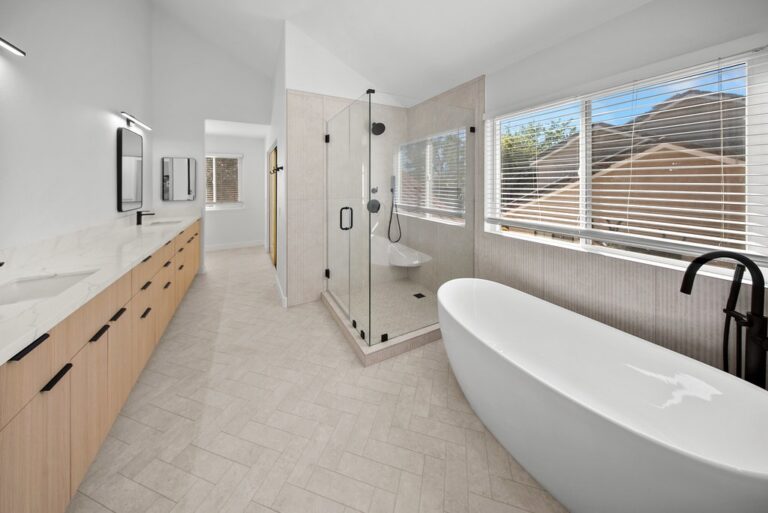
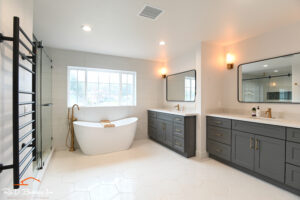
| Primary bath | $60K-$85K | Primary bath, 100-150 sq ft | Layout changes, freestanding tub, curbless shower, slab surfaces, custom glass and cabinetry. |
| Luxury primary suite | $85K and up | Large primary suite, often with closet | Structural work, steam, heated floors, book-matched stone, integrated lighting and controls. |
These ranges reflect typical permitted work in our market. Timing, material choices and selections can push the final cost higher than the ranges shown here.
$25K-$40K: the guest and hall bath refresh
This tier is a cosmetic rebuild inside the existing footprint. The toilet, the tub or shower pan, and the vanity all go back roughly where they were. You get a new vanity and top, a new toilet, new faucets and a new shower valve, plus new floor tile, a tiled tub or shower surround, new lighting, a new exhaust fan, and paint.
At the same time, the plumbing rough-in, the drain locations, the window and usually the subfloor all stay put. Fixture grade stays at quality stock rather than a specified designer line, and tile stays porcelain in a common format, often $6 to $12 per square foot. In a 1960s Woodland Hills tract bath, this tier gives you the most for the money. It is also the right call for a guest bath you use twice a month.
$40K-$60K: the full remodel to the studs
Here the room comes down to the studs, which is where the real value sits. Once the walls open up, you can correct the things that actually fail: rotted blocking, undersized venting, corroded galvanized supply lines, and shower pans that nobody sealed right. Homes built before 1970 turn up that old supply pipe often.
Scope at this tier usually includes a sheet-membrane or liquid-applied waterproofing system. Next comes a custom tiled shower with a niche and a glass enclosure, a semi-custom vanity with a quartz top, upgraded fixtures, and recessed and vanity lighting on separate switching. Modest plumbing moves fit here too. For instance, you can shift a vanity a few feet or swap a tub for a bigger shower. Finally, the wiring comes current with GFCI protection and a right-sized fan.
$60K-$85K: primary bathrooms
Layout freedom defines this tier. Plumbing moves where the design wants it, not where 1968 left it. Expect a freestanding tub with a floor-mounted filler, a curbless or low-curb shower with a linear drain, large-format porcelain or stone slab walls, custom cabinetry and heated floors. Likewise, frameless glass gets cut to the opening rather than ordered stock.
Fixture grade also steps up to specified lines with lead times measured in weeks, which means you lock selections before demo. Non-plumbing walls often move as well, to steal space from a hallway or a closet. If you are also reworking the adjoining closet or bedroom, compare that scope to a planned home addition first. In some cases, adding square footage is the cheaper answer.
$85K and up: luxury and spa-level
At this level the bathroom behaves like a small construction project rather than a room remodel. Structural changes come into play: crews remove a bearing wall, reframe a floor to drop it for a curbless entry, enlarge windows, or bump the exterior wall out. Systems turn serious as well. For instance, a steam generator needs its own drain and a sloped ceiling. Next comes a dedicated water heater or recirculation loop, plus lighting scenes and towel warmers.
Finishes drive a large share of the number too. Book-matched slab, hand-set mosaic, custom millwork and living-finish hardware all carry material and labor premiums. RnD builds a bathroom remodel in about 3 weeks of construction, and at this level the design, selections and permitting that come first take longer. Permitting turns into a real path item, not a formality.
Above the mid-range, tier is mostly a materials decision. Our guide to choosing bathroom materials covers which surfaces earn the upgrade and which do not.
Bathroom remodel styles that actually suit homes here
The housing stock in Woodland Hills, Tarzana and Encino skews mid-century ranch and 1970s two-story. By comparison, Calabasas and Hidden Hills lean Mediterranean, transitional and newer custom. Either way, style should follow the house rather than a saved image. Below are the directions that hold up in these neighborhoods, with the tier each one realistically needs.
Modern and contemporary
Floating vanity, frameless mirror, large-format tile, minimal hardware, neutral palette. Contemporary adds tech on top of that, such as digital shower controls, lit mirrors and in-mirror displays. However, modern reads cheap the moment the details slip. Because there is no trim, nothing hides a flaw. Floating vanities also need blocking in the wall, and often a moved drain. Likely tier: $40K to $60K at a minimum. For slab walls and a curbless entry, plan on $60K to $85K, and more at the luxury end.
Transitional
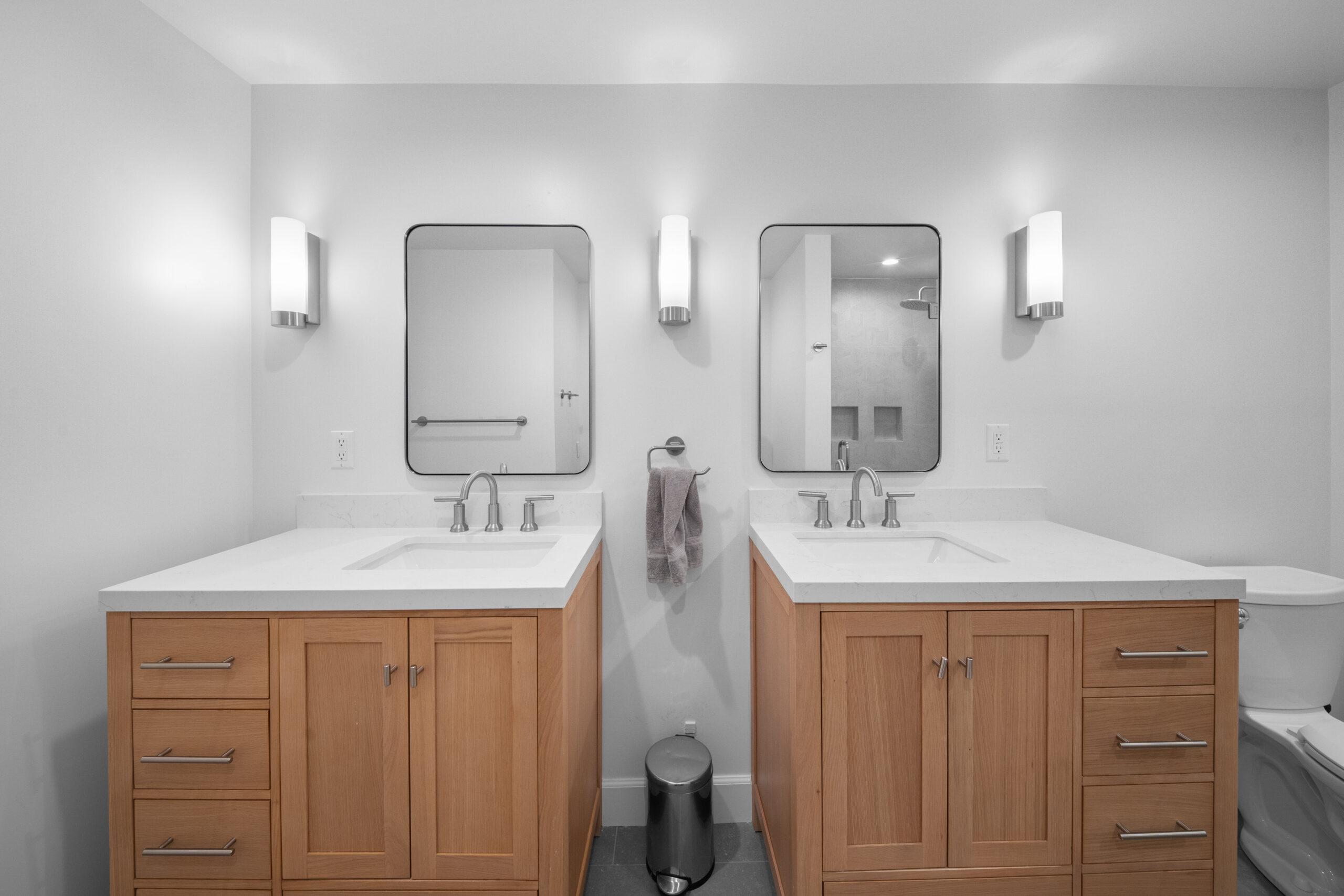
This is the most requested direction we see in Calabasas, and it pairs clean lines with warmth. Think shaker or slab-front cabinetry, quartz or honed marble tops, matte black or brushed brass. It photographs well, ages slowly, and does not fight a Mediterranean exterior. Likely tier: $40K to $60K for a hall bath, and $60K to $85K for a primary.
Traditional
Furniture-style vanity, paneled detail, a classic tub, softer neutrals, decorative lighting. This look suits older Encino and Tarzana homes with real millwork elsewhere. Here the cost lives in cabinetry and trim labor rather than plumbing. Likely tier: $40K to $60K, and more once the vanity goes fully custom.
Farmhouse and modern farmhouse
Shiplap or beadboard, apron sinks, matte black fixtures, wood tones, hex or subway tile. This style stays popular and works at the lower tiers. It also forgives rough walls, because the paneling covers a lot. Likely tier: $25K to $40K for a guest bath. Done right, with new waterproofing, plan on $40K to $60K.
Spa and wellness
Curbless shower, heated floor, steam, teak, layered dimmable lighting, stone. This is the one style nobody can fake at a lower tier. Every core element here works as a system rather than a finish. Likely tier: $85K and up.
What actually pushes the price up
Two bathroom remodels with the same finishes can differ by $40,000. Usually the gap sits in the items below.
Structure, plumbing and waterproofing
- Moving plumbing. Moving a toilet flange or a shower drain means opening the floor, cutting into joists within code limits, and re-sloping the waste line. On a slab-on-grade home it also means jackhammering concrete, and on a second floor it means opening the ceiling below. In practice, budget several thousand dollars per fixture moved, and more on slab.
- Tub to curbless shower. A zero-threshold entry needs the floor structure to drop, or the whole bathroom floor to build up. That is framing work, not tile work, and it usually pulls in a linear drain and a larger waterproofing scope.
- Waterproofing done correctly. A properly detailed shower costs more than a mud pan and a roll of plastic. Namely, it needs a sloped pre-slope, a bonded membrane, sealed corners and penetrations, and a correct curb wrap. Meanwhile bad waterproofing causes most of the tear-outs we see five years later.
Systems, glass and older Valley construction
- Heated floors and steam. Electric radiant needs a dedicated circuit and a floor-sensing thermostat. Steam needs a generator, a drain, a vapor-tight enclosure and a sloped ceiling. Either way, both cost far less during a remodel than after one.
- Custom glass. Stock enclosures stay cheap. However, frameless 3/8-inch or 1/2-inch glass costs real money. The shop templates it to a curbless opening, with notched panels. Because that happens after tile goes in, it also lands late in the schedule.
- Older Valley construction. Homes built before 1978 in Woodland Hills, Tarzana and Encino often turn up trouble. For example, we find asbestos in floor mastic or joint compound, lead paint, and galvanized supply. We also find cast iron drains at end of life, thin 1950s wiring, and framing out of plane. None of it is odd. All of it costs money.
The same pattern shows up in kitchens and other big-ticket work. Finish choices stay visible, but structure and systems set the price. We break the same math down in our kitchen remodel cost guide and on our kitchen remodeling page.
Permits and inspections in LA County and Calabasas
A cosmetic bathroom remodel often needs no permit. That means the same fixtures in the same places, paint, and a vanity that reuses the existing rough-in. Almost all other work does need a permit.
In most LA County jurisdictions, you need a permit once you alter or relocate plumbing, add or move electrical circuits, remove drywall, change the layout, or do structural work. Bathrooms in the unincorporated Valley and in Los Angeles city run through their own building departments. Meanwhile homes in the city of Calabasas go through the City of Calabasas building division, which contracts plan review and inspection and wants plans for any layout or structural change. Hidden Hills adds its own design review layer on top of building permits. For county work, LA County Building and Safety plan check spells out the submittal path.
The inspection sequence
Expect inspections in order. First come rough plumbing and rough electrical, then framing where crews did structural work. After that comes a shower pan water test, held for a set period, followed by insulation where the walls opened to the exterior, and final. Homeowners underestimate the pan test most. Tile does not go on until it passes, and a failed pan means the waterproofing comes back out.
Two practical notes round this out. First, California asks that new or altered bathroom exhaust duct to the exterior and meet current fan rules. Second, Title 24 rules for additions and alterations cover water use, which sets flow rates on showerheads and faucets. For a sense of how permit timelines behave here, read our walkthrough of the ADU permitting process; it covers the same departments and the same review queues.
How to tell a fair bathroom remodel bid from a lowball
The cheapest bathroom bid is usually the most expensive project. In short, here is what separates a real number from a placeholder.
Scope, allowances and permits
- Line-item scope, not a lump sum. A fair bid names the waterproofing system, the fan CFM and the number of fixtures moving. It also names who supplies what. Meanwhile a one-page total with “bathroom remodel” on it is a starting point for change orders.
- Named allowances. Tile, plumbing fixtures, glass and cabinetry should each carry a stated allowance with units. For instance, take a $4,000 tile allowance on a slab-clad primary bath. That is a lowball hiding in plain sight.
- Permits included and named. Sometimes a bid excludes permits, or the contractor suggests skipping them. Either way, the risk moves to you at resale and at your insurance claim.
License, schedule and contingency
- License, bond and insurance verified. Check the license number yourself on the CSLB license lookup. Confirm general liability and workers’ comp, not just a business license.
- A realistic schedule. RnD plans a bathroom remodel at about 3 weeks of construction, because design, selections and permits are settled first. Special-order tile, glass and fixtures are the reason that planning stage matters, so lock them in before demolition.
- A contingency line. On a pre-1980 home, some bidders never mention hidden conditions. Either they have opened few walls, or they plan to bill you later.
Ask every bidder the same question: what happens if you open the wall and find rot. That answer tells you more than the price does.
FAQ
Frequently Asked Questions
How much does a bathroom remodel cost in Los Angeles?
In the Calabasas and Woodland Hills area, most bathroom remodels run $25,000 to $85,000. A guest or hall bath refresh runs $25,000 to $40,000, a full remodel taken to the studs runs $40,000 to $60,000, and a primary bathroom runs $60,000 to $85,000. Luxury primary suites go beyond that, and timing, materials and selections can push any tier higher.
How much is a master bathroom remodel?
A primary bathroom remodel in this market typically runs $60,000 to $85,000. With steam, structural work or slab stone, it can go well beyond that. Primary baths nearly always involve moving plumbing rather than reusing it, and your selections drive the final number.
Do I need a permit to remodel a bathroom in Calabasas?
Yes, in most cases. A like-for-like cosmetic swap usually needs no permit. However, any plumbing move, wiring change, layout change or structural work does. The City of Calabasas building division will also want plans for layout changes.
How long does a bathroom remodel take?
RnD builds most bathroom remodels in about 3 weeks of construction once design, selections and permits are done. Larger scopes that move plumbing or walls take planning first, and your written schedule confirms the dates. Add lead time for custom glass, stone slabs and specified fixtures.
Is it cheaper to convert a tub to a shower?
Swapping a tub for a standard curbed shower in the same footprint costs a bit more than a new tub. Going curbless is a different project. Because the floor structure has to drop or build up, it brings in framing, a linear drain and a larger waterproofing scope. Usually that adds several thousand dollars.
What adds the most value in a bathroom remodel?
Correct waterproofing, adequate ventilation and a sensible layout add the most durable value. Those three items fail most often, and buyers' inspectors flag them. Among visible upgrades, a well-built shower with quality glass and good lighting returns the most.
Planning a Bathroom Remodel in Calabasas or Woodland Hills?
Use the form below to request a consultation. We will walk the room with you, confirm which tier your scope falls in, and give you a line-item number instead of a range.
Ready to start your project?
Schedule a consultation meeting today and get your project on the go!
We are glad to address any inquiries you may have. Please write us a few words about your project and we’ll set up a meeting with one of our project managers.
- (805) 367-1965
- info@rndbuildersinc.com
- 21250 Califa St, Suite #214, Woodland Hills, CA 91367
- CA License #1081122
Tell us about your project
As Seen
On



Awards









Our work
Completed Bathroom Remodeling Projects
Real homes RnD Builders finished across Los Angeles and Ventura County.
 Bathroom RemodelAgoura Hills Bathroom RemodelView project
- Bathroom RemodelManhattan Beach Bathroom RemodelView project
- Bathroom RemodelMoorpark Bathroom RemodelView project
- Bathroom RemodelNewbury Park Bathroom RemodelView project
- Bathroom RemodelOxnard Bathroom RemodelView project
- Home AdditionPlacentia Bathroom AdditionView project
- Bathroom RemodelThousand Oaks (2) Bathrooms RemodelView project
- Bathroom RemodelThousand Oaks Bathroom RemodelView project
- Bathroom RemodelThousand Oaks Bathroom Remodel (2026)View project
- Custom HomeWoodland Hills Custom HomeView project